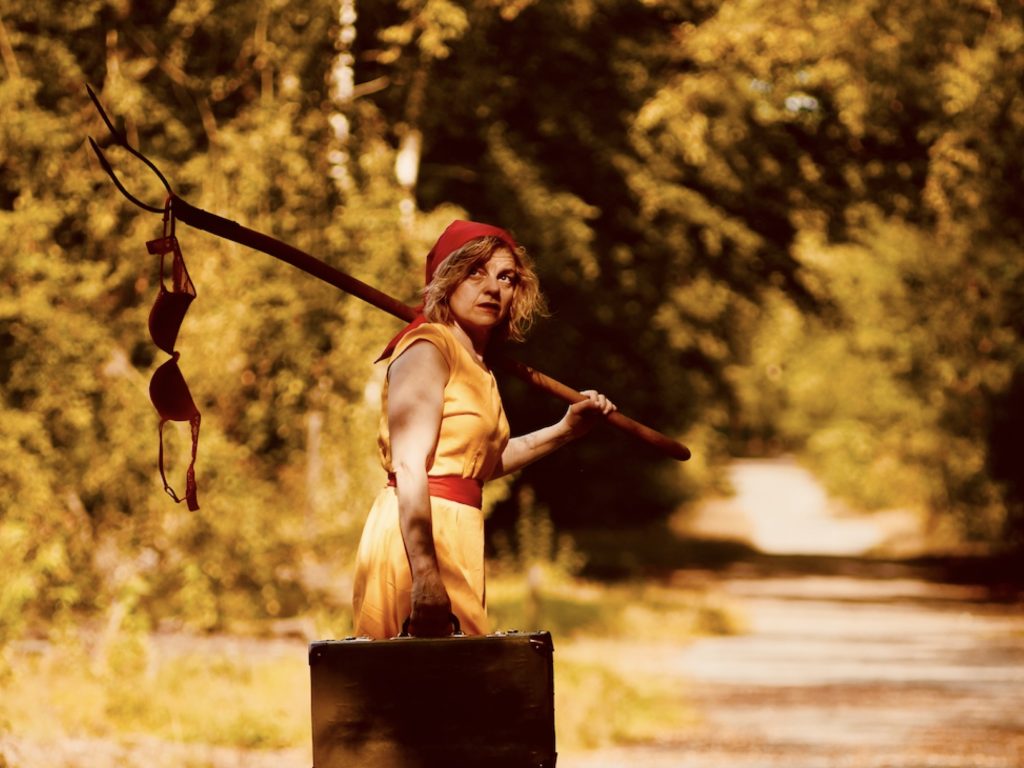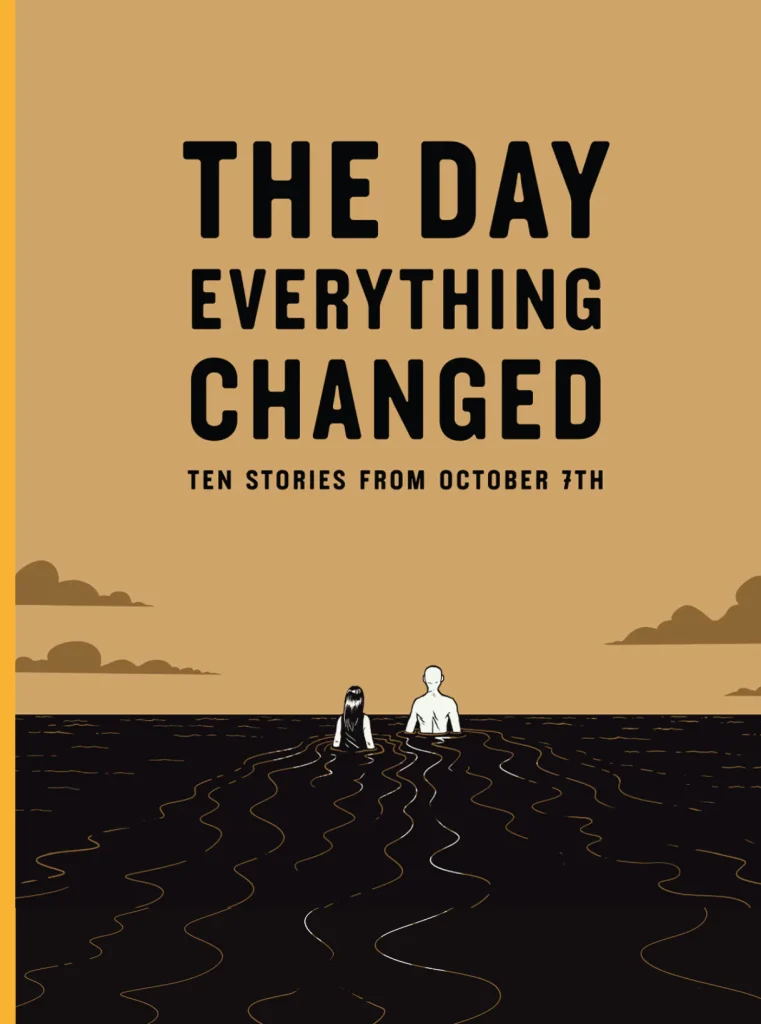
• Allergic to peanuts

    In the early 1990s and I meet Jeroen. He has a degree in business administration, a flashy job title, and a position at a large corporation. I, by contrast, am just starting out as a solo-entrepreneur. I’m young, inexperienced and face countless challenges. Jeroen works on complex projects and manages teams of consultants. To him, it’s all peanuts. He wears expensive suits, drives a sleek company car, and always has a vague but confident answer ready. He is a senior-something on his way to the top. I, meanwhile, am at the bottom of a deep, empty lake that is slowly filling up, I’m clinging to the fragile path I hope will take me upward. It is a hectic time. 

    My startup grows

    We speak often, though our relationship never grows into a true friendship. Our conversations touche on life, but revolve mainly around business, because that is Jeroen’s world. His worries are about budgets, promotions, and the service quality of his leasing company. Mine are about making payroll for the two people I employ, keeping cash flow steady, and whether I will spend Saturday night at a friend’s birthday or catching up on work.

    We stay in touch, though less so over the years. Jeroen becomes deputy director of a business unit, spends much of his time on the golf course, and mingles with high-ranking officials in a conceptual world I no longer recognise. I have climbed out of the lake and am steadily building a modest, international telecom-company on the shore. Jeroen still thinks it is all peanuts, but I cherish the fun with the professionals around me, the growth, and the drive to keep getting better.

    A new venture

    Then, in the summer of 2007, Jeroen calls me. He has been suspended from his job and will start his own business now. He doesn’t need my help, but he will show me that true entrepreneurship is all peanuts. Projects are already lined up, he assures me, and the rest will follow naturally. Under the banner of “lean and mean,” he envisions an organisation of ten people within two months. His first actions: he rents a luxury company car and an office with “appeal.” To celebrate, he hosts a launch-dinner in an upscale restaurant, where he hands me a glossy business card that reads: President & Senior Business Consultant. After diner he gives an upbeat talk, but never really makes clear what his company will be doing. I ask him what he will be do doing as senior business consultant. “Projects,” he says, “and the world is waiting for my approach.”

    Under target

    Two months later, we catch up again. He “only” has seven people working for him. I find it impressive, but he insists that he’s clearly operating under targets. “Minor issues” according to Jeroen, “it’s just that good talent is hard to find.” They have picked up some odd jobs and even some small projects, but with an invoiced turnover of just seventeen thousand euros, they are still far away from breaking even. “It’s all peanuts,” Jeroen insists. 

    He is working on landing some big projects, and only one needs to come through. He mentions success stories but mostly complains about setbacks. Like the leasing company that is causing problems. And he goes off about the coffee-machine that produces subpar quality. In the end those big projects never materialise, and eight months later he has to shut the business down. That’s no shame and can happen to anyone. That is the risk of being an entrepreneur. Jeroen doesn’t call me about it, so I have to hear it through the grapevine. 

    A cup of coffee

    Years later I run into him again. Or he runs into me, to be more precise. With my company I’m at a trade fair and we have our own big stand where we talk with customers and everyone interested in our solution or tech. We are selling a payment solution that made us national market leader. We literally serve thousands of shops, hospitals and other POS-locations in multiple countries. Jeroen appears to be a consultant on a project for a supermarket chain that we serve and visits our stand as a representative. He greets me, but doesn’t immediately connect me with the company he is visiting. He tells me he has a meeting with an account-director, but that he is a bit early and needs to wait for the procurement-director of the supermarket-chain. I point him to a free booth: “Let’s have a cup of coffee.” 

    Bad timing

    We have a good talk about life, but Jeroen is still all business. He tells me about the project he is working on for the supermarket-chain. It’s about payment-terminals and telecom-connections for hundreds of locations. He explains it grotesque and ultimately vague, but he does it with so much confidence that I would have believed it …. If I hadn’t been doing Telecoms myself for 15 years, including the design of the network for his employer. I contemplate if I should tell him, but decide not to do it as I see our account-director approaching. Instead I casually ask him about his former venture. I immediately regret my question as his face shows how painful that history is. Jeroen gets up to greet my colleague, but looks at me and says: “Yo know, I was too early. The market simply wasn’t ready for my innovative approach.”

    While I see him shaking my colleague’s hand and hear him introducing himself I clean the table. She smiles at him, then looks at me: “Can I take Jeroen with me boss? His colleague is waiting in the meeting-room.” Jeroen throws me a strange look. 

    I chuckle while I stack the empty cups: “Sure, no problem. Just know that Jeroen is allergic to peanuts.”

  • War Up Close

    It’s the titel of a play by Ksenia Marasanova, directed by Paul Dekker. In Dutch: “Zij zagen Oorlog“. I produce the show and helped with some texts. War Up Close shows war from all angles, through the eyes of people that are about to make a choice and have to live with the consequences.

    Ksenia takes you into the lives of people from different backgrounds. They all have good intentions and need to make a decision. It never goes dark and the curtain never closes. Ksenia transforms from one person into the next. It’s theater, so everything happens right before your eyes. You see it, you feel it.

    Final 2025 shows: Emmen, Groningen, Antwerpen, Almelo and Helmond.

    Dutch promo:

  • Red shadows in the Berlin Volkspark

    Short story

    Early on a September morning, Lior cuts through Volkspark Friedrichshain on his way to Ding Dong Ping Pong. The air carries the scent of rain on stone, and faintly, children’s laughter drifts between the trees. Sunlight brushes lightly over leaves and flowers, promising another warm day.

    He slows his pace at the fragrance garden, where a statue of a mother and child stands watch. Passing through the gate, Lior pauses to admire Edmund Gomansky’s 1898 sculpture. Around him, the garden hums with life — hungry insects busy themselves among the flowers, making the most of summer’s final days.

    Family Ties

    Mother and Child, Edmund Gomansky 1898.

    The statue makes Lior think of his own mother, and of her mother before her. And then of the darker stories about his great-grandmother and her parents. In 1898 that side of the family lived in Kolonia Yakovleva, in what is now Belarus but was then part of the vast Russian Empire. These rural villages, the kolonii, were created by the Tsarist government to cultivate the borderlands. They were self-sustaining settlements. Built on shared ownership and equality, a pioneering model quite unlike the better-known market towns, or shtetls — places like “Anatevka” from Fiddler on the Roof — which thrived on trade, culture, and religion. From the early 1900s, this idea of communal settlement was echoed in the Jewish Kibbutzim in Ottoman, later British-controlled Palestine, and eventually in Israel.

    Twentieth century

    Memorial to the German International Brigades, built by Soviet Union in the late ’60’s.

    When the October Revolution erupted in 1917, Lior’s family sided with the Bolsheviks, drawn by the promise of equality and an end to antisemitism. They believed deeply in socialist ideals, and several even volunteered in the International Brigades, fighting against Franco’s fascists in Spain between 1936 and 1939.

    It had been a rough path — marked by Tsarist violence, by war, by loss. The family’s story was one of resilience, but also of wounds that had never fully healed.

    Rocky road

    The “fountain of fairy tales” from 1913, designed by Ludwig Hoffmann.

    From the fairy-tale fountain, Lior continues his walk uphill. He knows he is quite literally climbing over the remnants of the Second World War. The hill beneath him is made of bunkers so solid that even the Red Army could not destroy them. Instead, they were simply buried under earth. Pausing, he glances down and notices two small rocks at the path’s edge. He bends to pick them up.

    A few minutes later, Lior lowers himself onto the steps of the Memorial to Polish Soldiers and German Anti-Fascists. Fresh flowers rest there, left by the Association of Persecutees of the Nazi Regime – Federation of Antifascists. For a moment he studies them in silence, then sets the two small rocks gently on the monument.

    For a while, Lior simply sits there. Between past and present, between stone and bloom. Grateful for the way Berlin always carried its memory not as a burden, but as a companion on a beautiful day.