
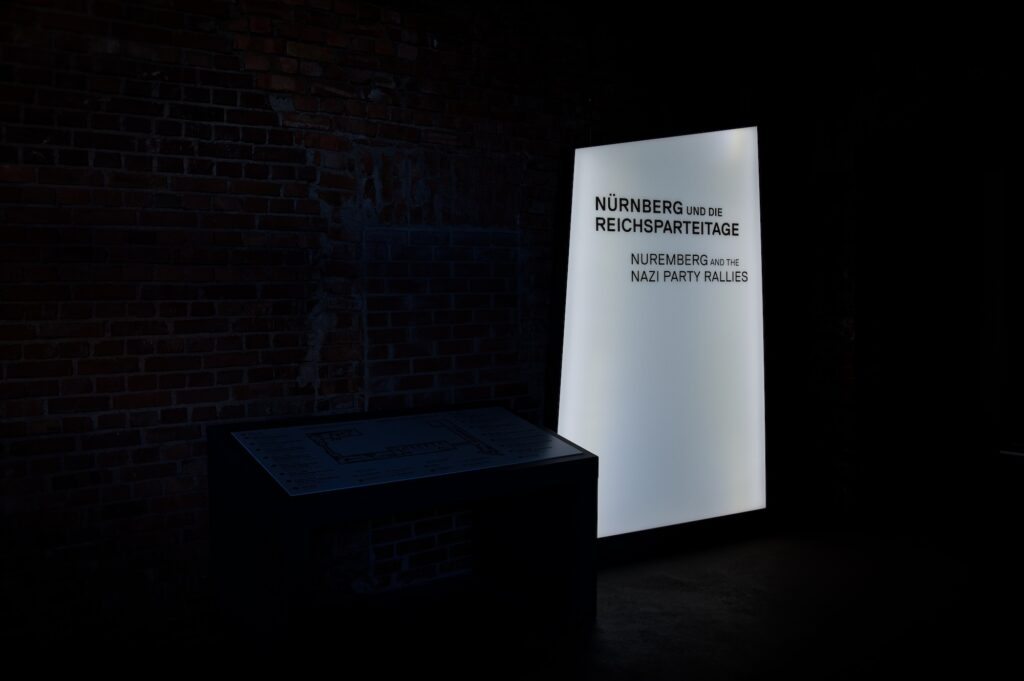
The German city of Nuremberg played a central role in the history of the Nazis. Before World War II, the NSDAP used the city to hold massive propaganda rallies (the Reich Party Rallies). After the war, Nuremberg became the very place where the Allies put a number of Nazi leaders on trial. A film about those trials, “Nuremberg,” starring Russell Crowe as Hermann Göring, was recently released; it’s also highly recommended. I went to Nuremberg to visit the “Dokumentationszentrum Reichsparteitagsgelände,” the newly opened exhibition on the rise of fascism in Germany in the 20’s and 30’s of the 20th century.
How to influence the intelligent center
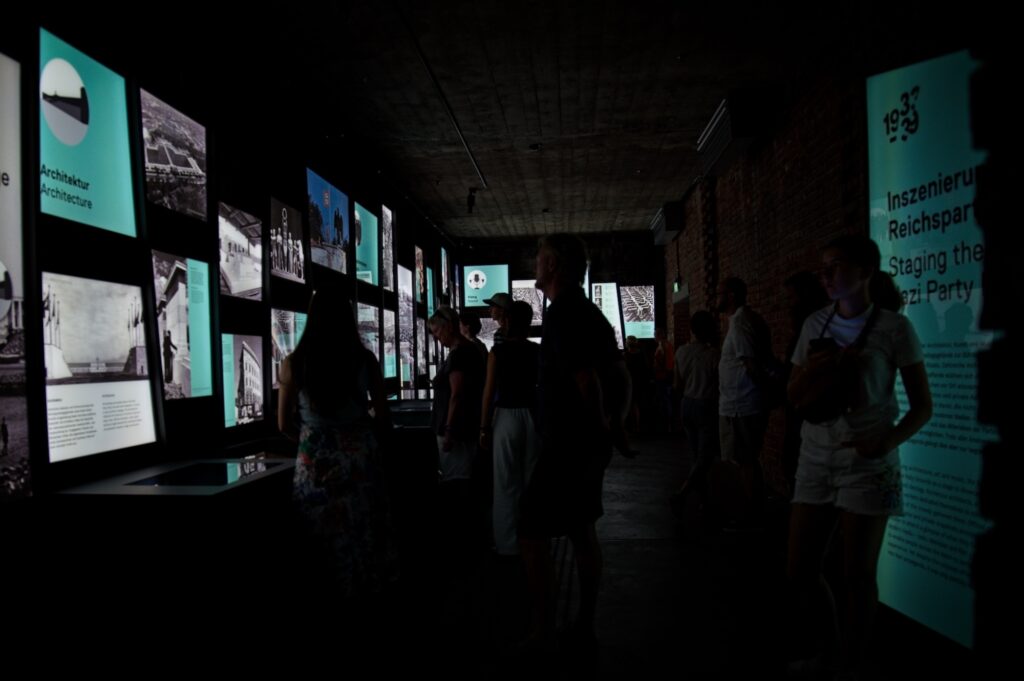
That exhibition taught me how the Nazi movement managed to reach the intelligent and self-aware central segment of the German population. The parallels with the current situation are unsettling, even though the exhibition in Nuremberg avoids addressing contemporary events. This outstanding exhibition offers a sobering glimpse into how propaganda works. The Nazis did not seek to persuade all Germans to vote for them, but rather focused on fostering understanding for their vision. Through endless and massive repetition of catchy slogans, they built support for their lies. Once that support was established, the educated segment would naturally overlook the rough edges and later give the movement the benefit of the doubt.
Lots of small rallies with banners and catchy slogans
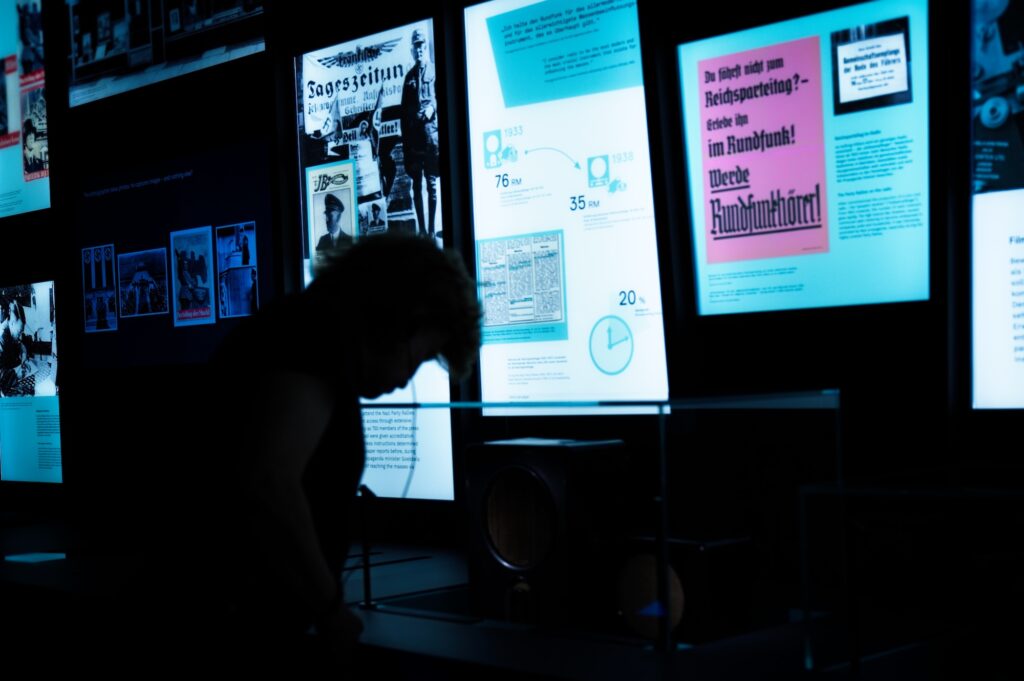
In the 1920s, the Nazis therefore organized small, supposedly spontaneous demonstrations throughout the country, where party members—armed with flags and slogans and paid to participate—gave the Nazi Party a public presence. Transported by bus and equipped with pre-printed signs, banners, and flags, these demonstrators were driven across the country to disrupt public order and bring the party’s vision to the attention of citizens and the media. As support grew, the rallies became larger and more violent toward dissenters, including critical journalists. We know the outcome.
Role of media
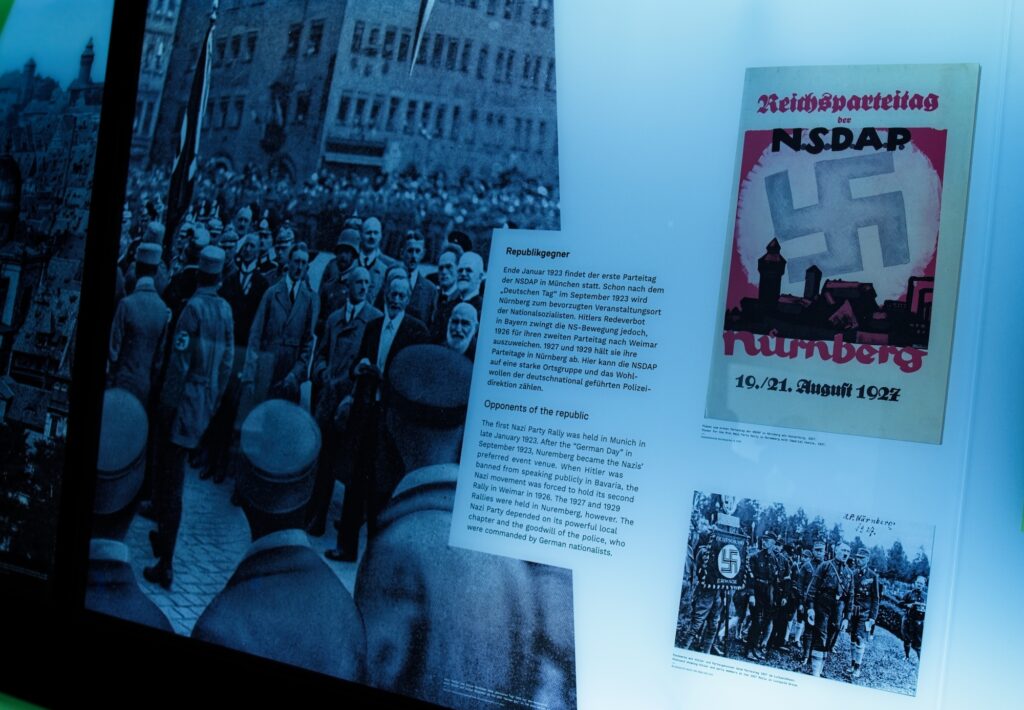
The exhibition is far from complete and is currently limited mainly to the period from after World War I through World War II. It focuses primarily on propaganda, the role of media owned by people of color, and the selective actions of government officials. It will keep you busy for at least six hours, and goosebumps are guaranteed.